
|
Keynote Speakers |
|
|
|
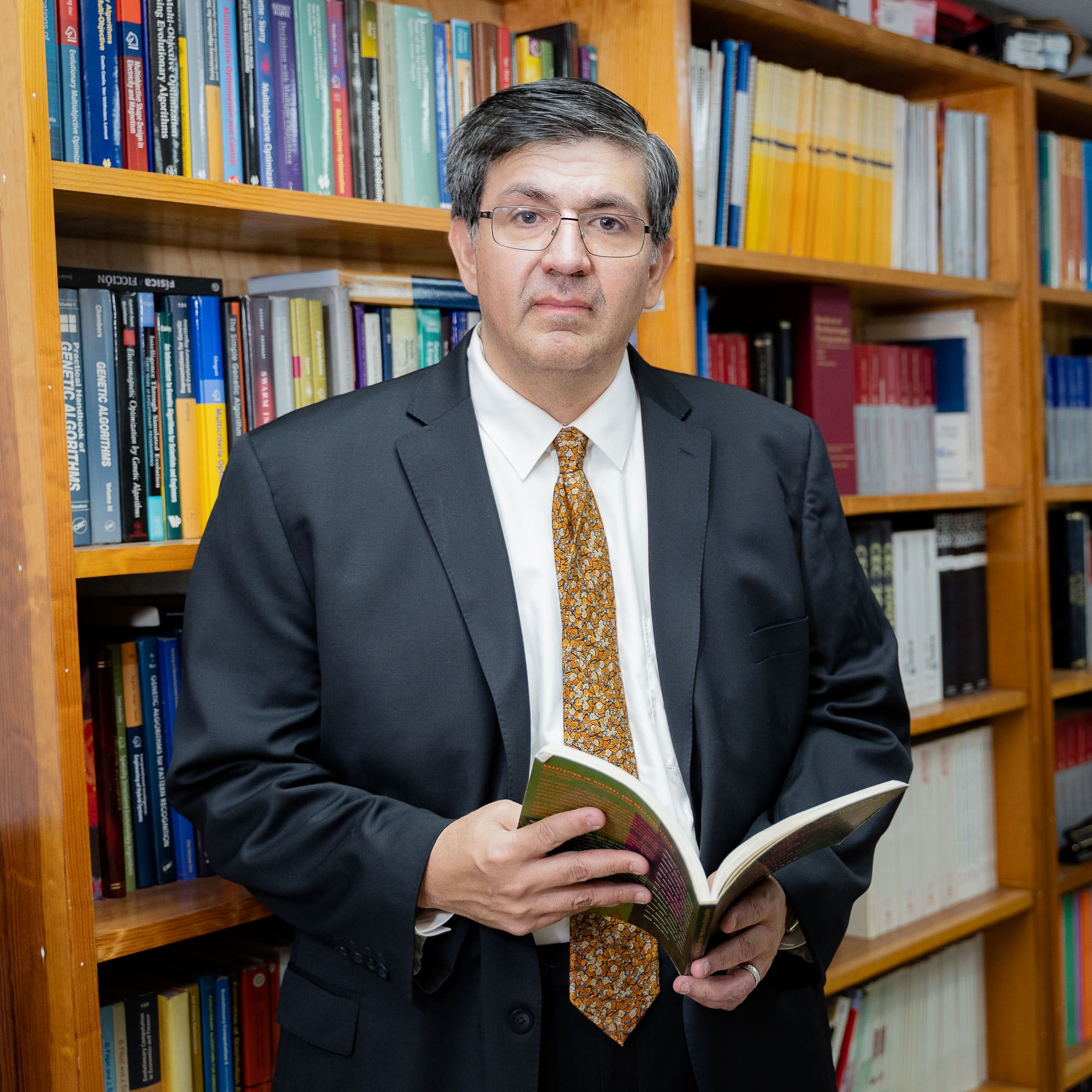
Prof. Carlos Artemio Coello Coello, IEEE Fellow
Carlos Artemio Coello Coello received a PhD in Computer Science from Tulane University (USA) in 1996. His research has mainly focused on the design of new multi-objective optimization algorithms based on bio-inspired metaheuristics (e.g., evolutionary algorithms), which is an area in which he has made pioneering contributions. He currently has more than 600 publications, including more than 200 journal papers and 50 book chapters. His publications currently report over 83,150 citations in Google Scholar (his h-index is 110). He has received several awards, including the National Research Award (in 2007) from the Mexican Academy of Science (in the area of exact sciences), the 2009 Medal to the Scientific Merit from Mexico City's congress and the 2012 National Medal of Science in Physics, Mathematics and Natural Sciences from Mexico's presidency (this is the most important award that a scientist can receive in Mexico). Additionally, he is the recipient of the 2013 IEEE Kiyo Tomiyasu Award, "for pioneering contributions to single- and multiobjective optimization techniques using bioinspired metaheuristics", of the 2016 The World Academy of Sciences (TWAS) Award in “Engineering Sciences”, and of the 2021 IEEE Computational Intelligence Society Evolutionary Computation Pioneer Award. Since January 2011, he is an IEEE Fellow. He is currently the Editor-in-Chief of the IEEE Transactions on Evolutionary Computation. He is Full Professor with distinction (Investigador Cinvestav 3F) at the Computer Science Department of CINVESTAV-IPN in Mexico City, Mexico.
|
|
Prof. Ujjwal Maulik, IEEE Fellow
Dr. Ujjwal Maulik is a Professor in the Dept. of Comp. Sc. and Engg., Jadavpur University since 2004. He was also the former Head of the same Department. Dr. Maulik has worked in many universities and research laboratories around the world as visiting Professor/ Scientist including Los Alamos National Lab., USA in 1997, Univ. of New South Wales, Australia in 1999, Univ. of Texas at Arlington, USA in 2001, Univ. of Maryland at Baltimore County, USA in 2004, Fraunhofer Institute for Autonome Intelligent Systems, St. Augustin, Germany in 2005, Tsinghua Univ., China in 2007, Sapienza Univ., Rome, Italy in 2008, Univ. of Heidelberg, Germany in 2009, German Cancer Research Center (DKFZ), Germany in 2010, 2011 and 2012, Grenoble INP, France in 2010, 2013 and 2016, University of Warsaw in 2013 and 2019, University of Padova, Italy in 2014 and 2016, Corvinus University, Budapest, Hungary in 2015 and 2016, University of Ljubljana, Slovenia in 2015 and 2017, International Center for Theoretical Physics (ICTP), Trieste, Italy in 2014, 2017 and 2018 and Stanford University in 2025. He is the recipient of Alexander von Humboldt Fellowship during 2010, 2011 and 2012 and Senior Associate of ICTP, Italy during 2012-2018 and Fulbright Fellowship in 2024-2025. He is the Fellow of Indian Nationl Science Academy (INSA), Indian National Academy of Engineers (INAE), India, National Academy of Science India (NASI), International Association for Pattern Recognition (IAPR), USA, The Institute of Electrical and Electronics Engineers (IEEE), USA and Asia-Pacific Artificial Intelligence Association (AAIA), Hongkong. He is also the Distinguish Member of the ACM. He is a Distinguish Speaker of IEEE as well as ACM. His research interest include Machine Learning, Pattern Analysis, Data Science, Bioinformatics, Multi-objective Optimization, Social Networking, IoT and Autonomous Car. In these areas he has published ten books, more than four hundred papers, mentoring several start-ups, filed several patents and already guided twenty eight doctoral students and more than hundred master and undergraduate projects. His other interest include mentoring young students, traveling extensively around the globe, outdoor Sports and Music.
|
|
Prof. Sanghamitra Bandyopadhyay, IEEE Fellow
Prof. Sanghamitra Bandyopadhyay did her B Tech, M Tech and Ph. D. in Computer Science from Calcutta University, IIT Kharagpur and Indian Statistical Institute respectively. She then joined the Indian Statistical Institute as a faculty member, where she is currently a senior Professor. She was the Director of the Institute for the terms 2015-2020 and 2020-2025. Her research interests include computational biology, soft and evolutionary computation, artificial intelligence and machine learning. Prof. Bandyopadhyay has worked in many Institutes and Universities worldwide. She is the recipient of several awards including the Shanti Swarup Bhatnagar Prize in Engineering Science, TWAS Prize, Infosys Prize, JC Bose Fellowship, Swarnajayanti fellowship, INAE Silver Jubilee award, INAE Woman Engineer of the Year award (academia), IIT Kharagpur Distinguished Alumni Award, Humboldt Fellowship from Germany, Senior Associateship of ICTP, Italy, young engineer/scientist awards from INSA, INAE and ISCA, and Dr. Shanker Dayal Sharma Gold Medal and Institute Silver from IIT, Kharagpur, India. She is a Fellow of all the National Science Academies and the Engineering Academy of India, IEEE, The World Academy of Sciences (TWAS), and International Association for Pattern Recognition (IAPR). She serves as a member of the Science, Technology and Innovation Advisory Council of the Prime Minister of India (PM-STIAC). In 2022, she was conferred the Padma Shri award of the Government of India.
|
|
Prof. Dr. Yang Tang, IEEE Fellow
Dr. Yang Tang is now a Professor at Department of Automation, and the Key Laboratory of Smart Manufacturing in Energy Chemical Process, Ministry of Education, East China University of Science and Technology, Shanghai, China. He was a Research Associate with the Hong Kong Polytechnic University, Hong Kong, from 2008 to 2010. From 2011 to 2015, he conducted his postdoctoral research with the Humboldt University of Berlin, Berlin, Germany, and the Potsdam Institute for Climate Impact Research, Potsdam, Germany. He is now a Professor with the East China University of Science and Technology, Shanghai, China. He has published over 190 refereed papers in international journals such as Nature Communications, Patterns (Cell Press), Automatica, IEEE Transactions, SIAM Journals, CCF-A and APS journals (including more than 30 papers in IEEE TAC and Automatica). His current research interests include multi-agent systems/complex networks, cyber-physical systems, artificial intelligence, autonomous systems, hybrid dynamical systems, and their applications. Dr. Tang was a recipient of the Alexander von Humboldt Fellowship in 2011 and he got the National Young Distinguished Professor and National Distinguished Professor of 2015 and 2020, respectively.
|
|
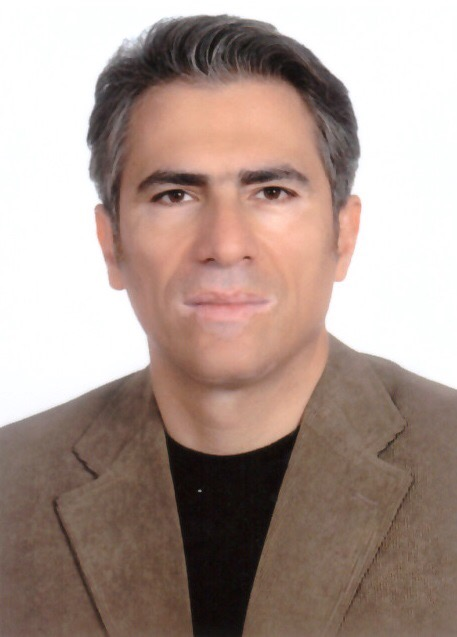
Prof.Mehdi Toloo
Mehdi Toloo is a Reader in Business Analytics at Surrey Business School, UK. Before that, he held a Professor position in Systems Engineering and Informatics at the Technical University of Ostrava, Czech Republic, and a Professor position in Operations Management at Sultan Qaboos University, Muscat, Oman. Areas of interest include Business Analytics, Operational Analytics, Operations Research/Management, Decision Analysis, Performance Evaluation, Multi-Objective Programming, and Mathematical Modelling. He has contributed to numerous international conferences as a chair, keynote speaker, presenter, track/session chair, workshop organizer, and member of the scientific committee. Mehdi is recognized among THE TOP 2% OF SCIENTISTS WORLDWIDE in Business Analytics & Operations Research for 2020-2025, an annual ranking published by Stanford University in collaboration with Elsevier.
Mehdi has extensive experience in leading and collaborating on many international research projects. He acts as an editor for Computers & Industrial Engineering (ELSEVIER), Decision Analytics (ELSEVIER), Healthcare Analytics (ELSEVIER), Supply Chain Analytics (ELSEVIER), Journal of Business Logistics (WILEY), RAIRO-Operations Research (EDP Sciences), and Central European Journal of Operations Research (SPRINGER). He has written fifteen books, and his research has mainly been published in top-tier (4*/3*) journals, including European Journal of Operational Research, OMEGA, Energy, Computers & Industrial Engineering, Journal of the Operational Research Society, and Annals of Operations Research.
This talk provides an accessible introduction to DEA and demonstrates how it complements modern data science techniques. Unlike predictive machine learning models that focus on forecasting future outcomes, DEA identifies best-performing entities, quantifies inefficiency, and provides actionable improvement targets without requiring predefined functional relationships. The presentation will discuss recent developments in DEA, including integration with machine learning, big data analytics, explainable AI, and digital transformation. Applications in healthcare, finance, manufacturing, supply chain management, energy, and smart systems will be presented to illustrate how DEA supports evidence-based decision-making.
The talk will also highlight emerging research directions, including selective measures, network DEA, sustainability assessment, and the evaluation of AI-enabled and digital systems. The objective is to demonstrate that DEA remains a powerful analytical framework for transforming complex data into meaningful managerial insights and intelligent decisions.
|
|
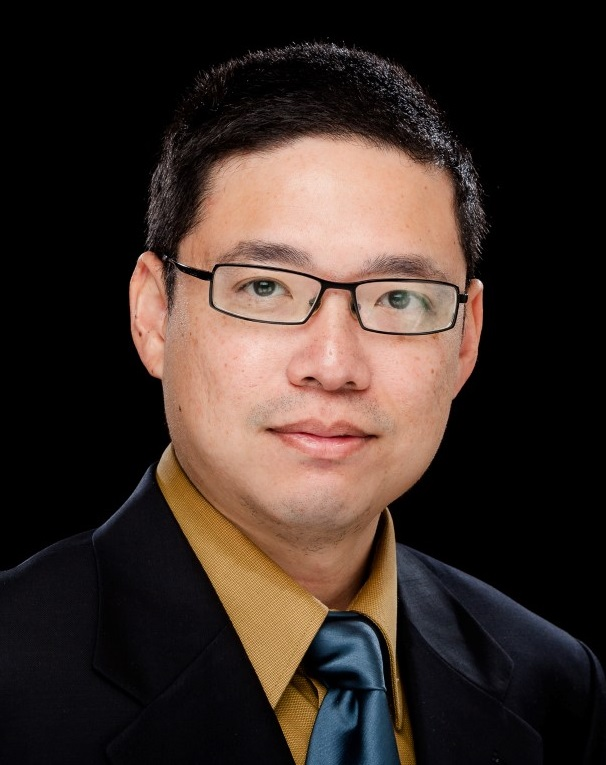
Prof. Dr Kelvin Kian Loong Wong, PhD, FIEAust, FZaAS, SMIEEE
Kelvin K.L. Wong received the B.Eng. degree (Hons.) in mechanical and production engineering from Nanyang Technological University, Singapore, in 2001, the M.A.I.T. degree in applied information technology from The University of Sydney, Australia, in 2003, and the Ph.D. degree in electrical and electronic engineering from The University of Adelaide, Australia, in 2009. His research focuses on algorithms, image processing, and computational science, with a particular emphasis on integrating cybernetics and artificial intelligence (AI). He is widely recognized for introducing Cybernetical Intelligence, published by John Wiley & Sons (ISBN: 9781394217489). He has been elected Fellow of The Institution of Engineers, Australia (FIEAust), Senior Member of IEEE, and Full Member of Sigma Xi. His work in AI and biomedical engineering has had significant scientific and societal impact, and he has served extensively as associate editor and guest editor for leading journals. In 2020, he was ranked among Stanford University’s top 1.3% biomedical engineering researchers. He has been included in the World’s Top 2% Scientists Network (https://topscinet.com) for more than five consecutive years from 2021 to present. He has supervised numerous students, reviewed grants for agencies such as the Swiss National Science Foundation, and led interdisciplinary teams in AI. He was elected Foreign Fellow of the Zambia Academy of Sciences (FZaAS) in 2024. He has developed NeuralX, the Deep Red AI system, and has led the advancement of Cybernetical Intelligence in applications of image processing and computing technologies. Kelvin KL Wong has been appointed as a Lecturer de la Catedra at the UNESCO Chair Series in "Economic Systems and Human Right" (National University of La Plata, Argentina).
|